
Need Support?
Contact us if you need further assistance
Sector
Design, manufacture, installation and maintenance of polyester and steel pools
Services

THE COMPANY
Our client is a company specialized in the design and construction of pools, with a consolidated track record in the sector. Their offering combines technical expertise, personalized advice and solutions tailored to each project, supporting the client from planning through to final execution.
In recent years, the company has driven digital acquisition through its website and various online channels, generating a steady flow of contacts interested in their services. This growth has increased the volume of commercial opportunities, making it necessary to improve lead management, commercial follow-up and results analysis to maintain efficiency and increase conversion into real projects.
Our client generates more than 1,500 contacts a year through various digital channels (web, forms, campaigns, etc.). This volume highlighted the need to better structure the management of commercial opportunities and connect marketing and sales within the same system. The challenge consisted of:
The objective was not simply to manage more contacts, but to build a centralized digital ecosystem based on HubSpot, where marketing, sales and data work in an integrated way.
From the outset it was identified that growth in digital acquisition required more than just adopting a technological tool: it was necessary to design a system that connected inbound marketing, automation and commercial management to transform the volume of leads into real opportunities.
To do this, the implementation of HubSpot Marketing Hub and HubSpot CRM was proposed as the core of the digital ecosystem, centralizing contact acquisition, marketing automations, lead nurturing and commercial management in a single platform. The goal was to build a structured, measurable and scalable inbound system that accompanied the lead throughout their decision-making process.
From this approach an integrated strategy was designed aimed at:
These were the three main strategic lines we followed:
The first step consisted of designing an acquisition system consistent with the decision process of our client’s buyer persona. The decision to build a pool usually involves a process of reflection and comparison, so the strategy had to accompany the user from the initial exploration phase until the moment they are ready to speak with the sales team.
This involved developing an acquisition ecosystem based on different digital assets, such as blog content, downloadable resources, strategic calls to action and SEM campaigns aimed at capturing qualified traffic.
All these entry points were integrated with HubSpot Marketing Hub, allowing each digital interaction to automatically generate a new contact within the CRM.
In this way, acquisition shifted from relying solely on direct quote requests to becoming a structured system for generating opportunities.
Once captured, contacts become part of a marketing automation system designed in HubSpot.
For this, different automated workflows were designed, segmented by product and stage of the buyer journey, allowing communication to be adapted to the stage each contact is in.
This enabled:
The objective was not to artificially accelerate the decision, but to support the user with relevant information, building trust and maintaining interest until they are ready to start a commercial conversation.
The third strategic pillar was to ensure that the entire inbound system facilitated the work of the sales team.
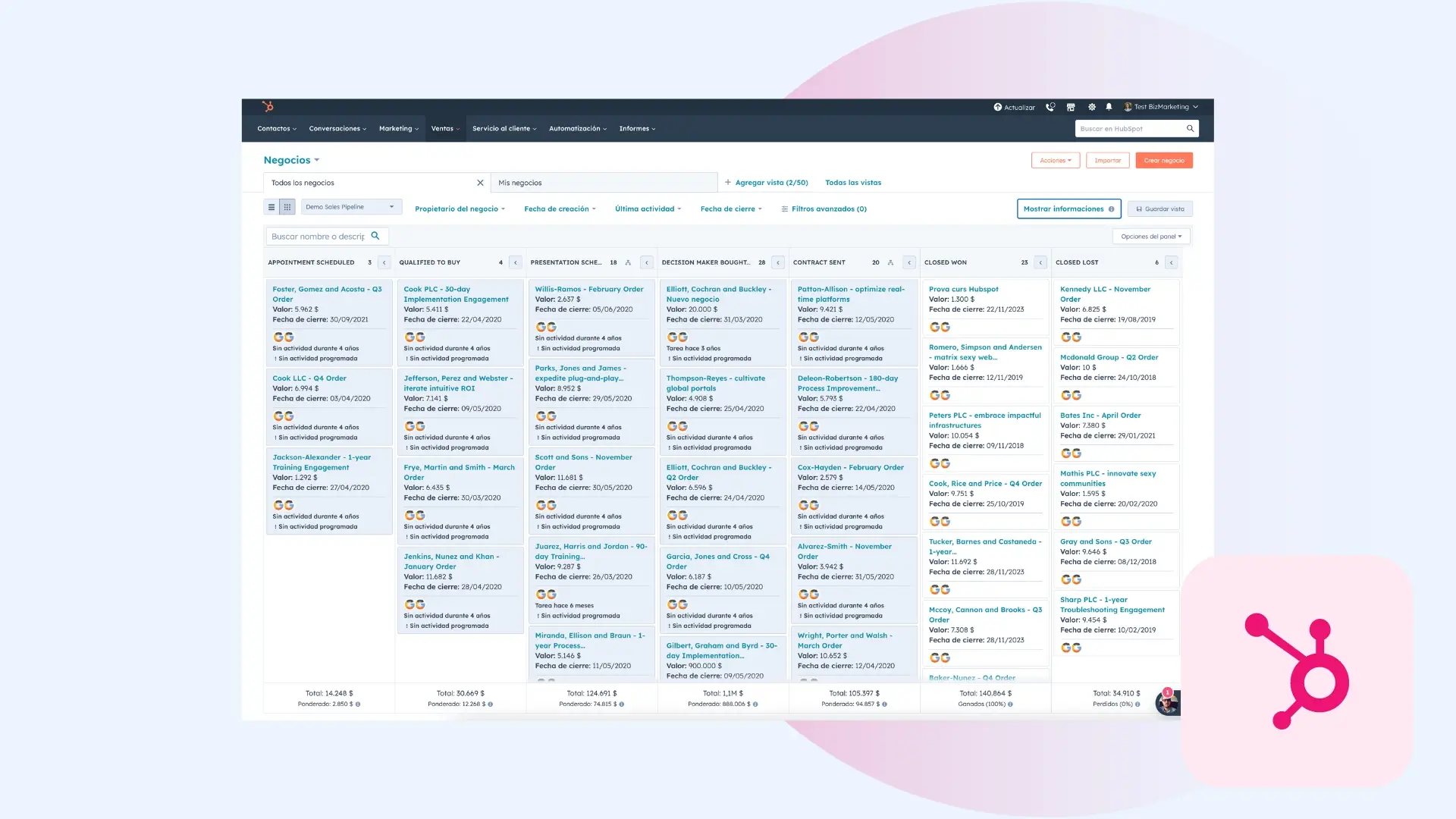
To do this we work on the HubSpot CRM structure to adapt it to the company’s commercial process, leveraging the connection between contacts, companies and deals to have a complete view of each lead’s journey from their first interaction to the generation of a business opportunity.
This system allows:
Thanks to this structure, the sales team can prioritize its activity on the most relevant opportunities, while marketing continues working on nurturing contacts that are still in the early stages of the decision process.
The implementation of HubSpot Marketing Hub and marketing automation enabled transforming digital acquisition into a structured system for generating commercial opportunities.
The main results include:
The opportunity conversion rate went from 5.5% in 2020 to a steady average between 14% and 15.5% in recent years, which represents nearly tripling the initial closing rate.
Furthermore, the team now has full visibility of the commercial funnel, from lead acquisition to opportunity generation in the pipeline.
Overall, the company has moved from managing contacts in a scattered way to having a connected digital ecosystem based on HubSpot, capable of scaling lead acquisition and opportunity generation with greater efficiency, control, and analytical capabilities.
We analyze your situation and help you identify how to connect marketing and sales to drive your company’s growth.