Inbound Marketing
“Many times people don’t know what they want until you show it to them.” Steve Jobs.
Inicio » Inbound Marketing
What is Inbound Marketing?
Inbound marketing is a methodology that uses various marketing techniques to guide users from the moment they begin their purchasing journey until they decide to buy your product and/or service.
The key feature of inbound marketing is attraction: in other words, users find you rather than you having to go out and find them. Once they find you, it is vital to provide them with value through relevant content at every stage so that you stand out from your competitors.
From here, following the stages of Inbound Marketing and having defined the buyer personas, actions are created to delight users and create sales opportunities.

The stages of Inbound Marketing
To accompany our user throughout their entire buying process in an Inbound Marketing strategy, there are 4 stages we must consider:
In each of these phases, different types of content, techniques and digital marketing tools are worked on so that our user feels that our brand provides value at all times and wants to stay with us. In this way, our initially unknown user will go on to become a promoter and advocate of our brand, product and/or service.

The Inbound Funnel or Inbound Marketing funnel
Just like in the Customer Journey where the buyer goes through several stages, in an Inbound Marketing strategy it is the same. Thus, these stages begin with attracting strangers, continue with converting them into leads, closing the sale and end with the delight phase.

ATTRACT





CONVERT


CLOSE





DELIGHT




ARTIFICIAL INTELLIGENCE IN INBOUND MARKETING
The artificial intelligence allows us to take Inbound Marketing to another level: intelligent content automation, customer behavior prediction, experience personalization, and lead scoring optimization. At BizMarketing we implement AI tools AI to improve every stage of the funnel and maximize our clients’ results.
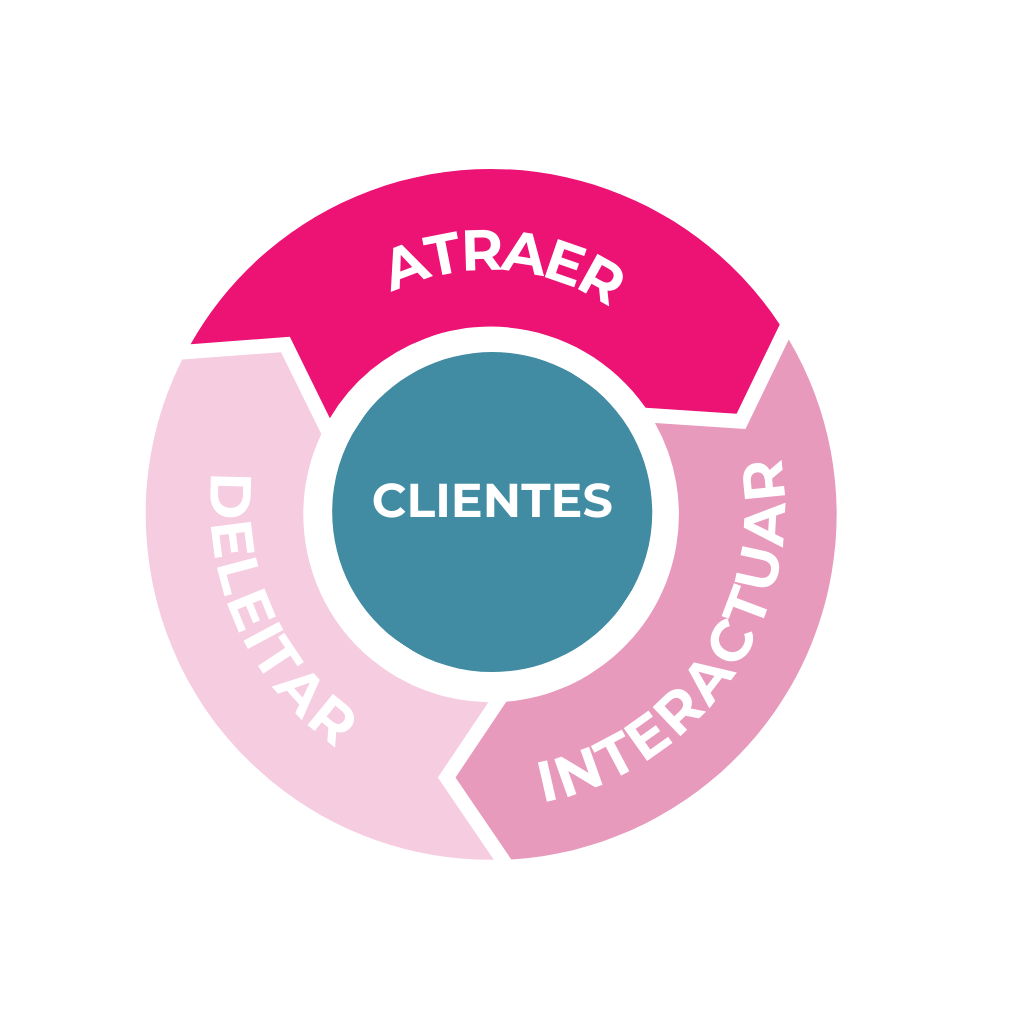
FLYWHEEL MODEL - A CONTINUOUS CYCLE TO DRIVE GROWTH
Traditionally, companies focused on attracting customers through a funnel that guided prospects through a linear process: from attraction to conversion. However, this approach ignores an essential component: the customer experience after the sale.
Unlike the funnel that ends once a sale is closed, the flywheel is a circular, continuous model that focuses on attracting, delighting, and retaining customers. By putting the customer at the center, we create a cycle of self-sustaining growth based on the user experience.
Why should you bet on an Inbound Marketing strategy?
Today it is almost impossible to have a good presence in the digital world without using some Inbound Marketing technique. But by applying a complete Inbound Marketing strategy your business will be launched into the digital world.
The advantages of Inbound Marketing are numerous: the different techniques will help you reach your buyer persona more effectively, you will be able to attract more customers and you will create closer bonds that will translate into new leads for your business. In addition, you will gain more visibility thanks to SEO and content marketing techniques. Finally, you will be able to verify the return on investment yourself through ROI.
Differences between Inbound Marketing and Traditional Marketing
One of the main differences between Inbound Marketing and Outbound Marketing is the way users interact with a company’s content. In Outbound Marketing or Traditional Marketing, communication was intrusive and direct, trying to sell our products and services to as many people as possible.
With an Inbound Marketing strategy the communication is completely different. With new technologies, it is the users who, through search engines such as Google, find different products and services that satisfy their needs. From there, Inbound marketing seeks to attract and delight the potential buyer.
Buyer Persona
Buyer personas are fictional profiles we create based on our ideal customers. The buyers are essential elements to consider in our digital Inbound Marketing strategy. For this, they must be defined with great determination and knowledge: know their needs, their problems, their demographic data, etc.
Therefore, once we are clear about the buyer personas that need to be defined for our business, we can begin to think about and create our Inbound strategies according to their needs and their position in the inbound phases.
The Buyer Journey - Purchase Cycle
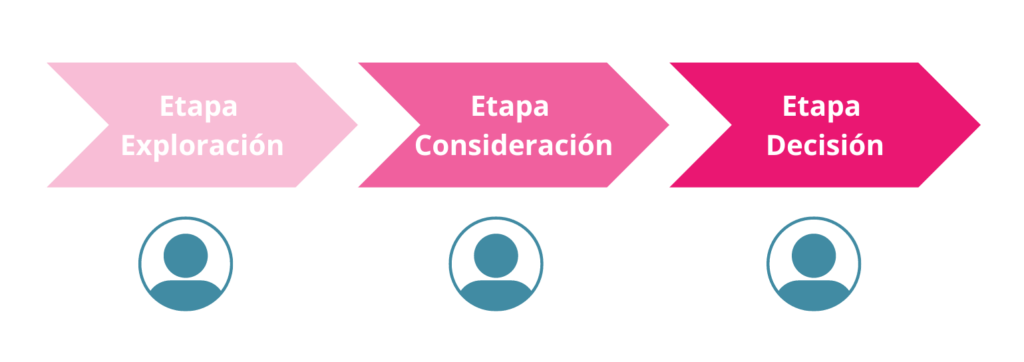
For a user to end up buying one of your products and/or services, they must go through the 4 phases of the Buyer Journey or purchase cycle. These phases are: becoming aware of a need, consideration, decision and evaluation. Therefore we are going to help you understand which phase the user interacting with your business is in.
Inbound Marketing in B2B
In Inbound Marketing Business to Business we must understand which companies and businesses visit us and offer them the appropriate content at each phase of the Buyer Journey. To do this we will find out which company representatives visit our business the most. That way we won’t communicate with them blindly, but we will have initial information to speak to them with accurate and authoritative data.

Inbound Marketing for Apps and/or Software
Inbound Marketing for businesses that develop software or mobile applications is a must to gain notoriety and online visibility. The inbound methodology helps increase the number of app downloads or users who use your software thanks to the work of defining the buyer persona or ideal customer and supporting them through the entire purchase decision process.
Inbound Marketing in B2C
Inbound Marketing in Business to Consumer focuses on getting qualified traffic to the website, so that we can tag each and every visitor to learn more about them. Also, they should be followed up to know when is the most suitable moment to send them one type of content or another depending on which buying phase they are in.
